Skincare — Ingredients
Pore-clogging ingredients, explained
Some ingredients are more likely to trigger blackheads and breakouts — but the whole formula matters more than one name.
7 minute read
Written and reviewed by Beauty World Editorial · Last reviewed October 2026
Basics
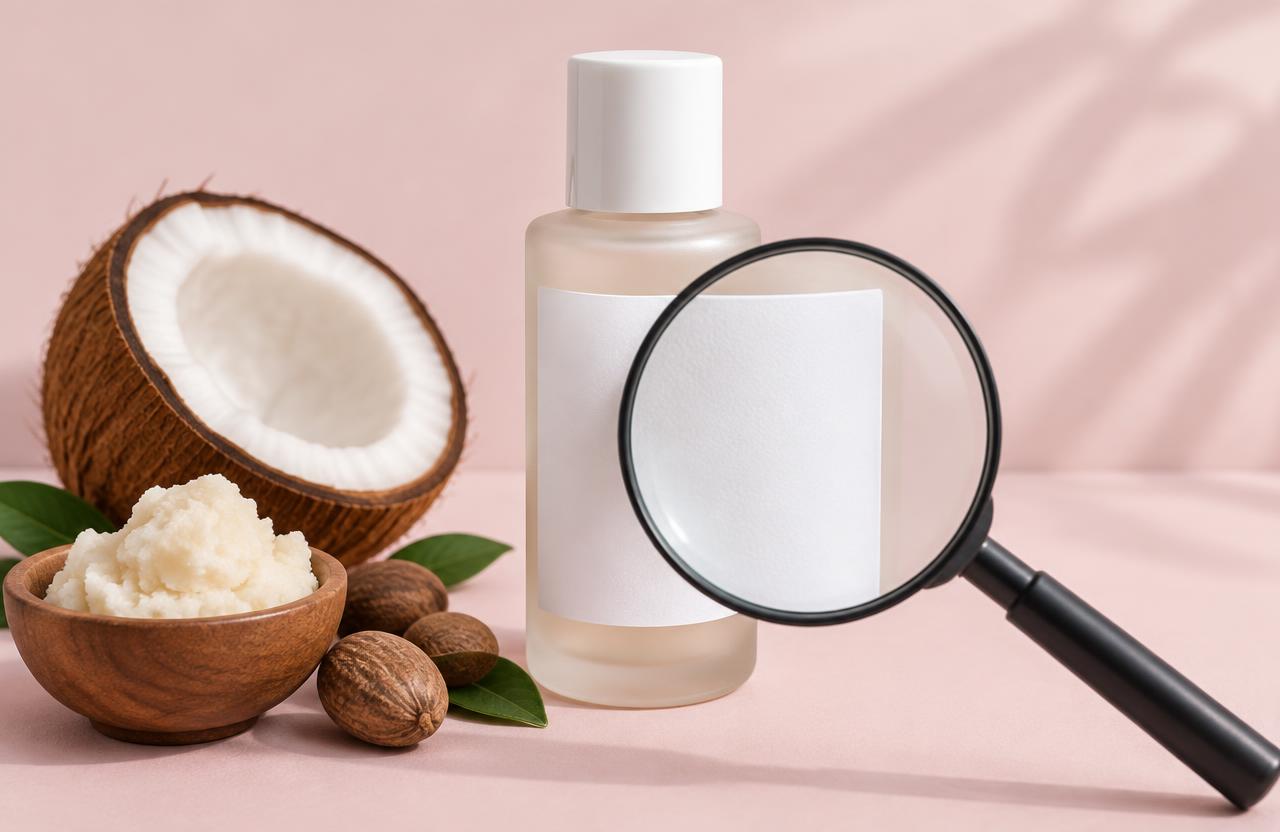
What 'comedogenic' really means
Definition
Comedogenic means an ingredient may block pores and form comedones (blackheads and whiteheads).
Ratings have limits
Old 0–5 scales came mostly from rabbit-ear tests at high concentrations, not finished products.
Context matters
Amount, the rest of the formula and your skin type change the outcome.
'Non-comedogenic' label
Helpful but not regulated the same way everywhere; it isn't a guarantee.
Watch list
Ingredients often flagged
Coconut oil
Frequently reported to clog pores on the face for acne-prone skin.
Isopropyl myristate & isopropyl palmitate
Emollients commonly flagged in older comedogenicity lists.
Cocoa butter
Rich butter that can be heavy for oily faces.
Algae / seaweed extracts
Some, such as carrageenan, appear on many watch lists.
Lanolin derivatives
Acetylated lanolin and some forms are commonly flagged.
Wheat germ, flaxseed & soybean oils
Heavier oils that some acne-prone skin reacts to.
Heavy waxes & laureths
Some laureth-4 and lauric acid formulas are often mentioned.
Usually fine
Generally low-risk options
Squalane
Lightweight and rarely problematic.
Glycerin & hyaluronic acid
Water-binding and non-oily.
Dimethicone
Silicone that sits on the surface; usually tolerated.
Niacinamide
Supports oil balance and the barrier.
How to
Check products step by step
1. Scan the first ingredients
The first five to seven make up most of the formula.
2. Match to your skin
Dry skin often tolerates richer oils; acne-prone skin may not.
3. Patch test
Use on one small area, such as along the jaw, for 1–2 weeks.
4. Introduce one at a time
Then you'll know which product caused a breakout.
5. Keep a note
Track ingredients in products that broke you out to spot patterns.