Skincare — Ingredients
Vitamin C serum guide
An antioxidant that brightens, evens tone and boosts your sunscreen's protection — when you pick the right form.
7 minute read
Written and reviewed by Beauty World Editorial · Last reviewed October 2026
Benefits
What vitamin C does
Antioxidant
Helps neutralise free radicals from sun and pollution.
Brightening
Fades dullness and dark spots over weeks.
Collagen support
Needed for collagen production, which keeps skin firm.
Works with SPF
Adds extra protection under sunscreen — never replaces it.
Forms
Choose the right type
L-ascorbic acid (10–20%)
Most researched and potent; can sting sensitive skin and oxidises fast.
Sodium ascorbyl phosphate
Gentler and stable; good for acne-prone skin.
Magnesium ascorbyl phosphate
Hydrating and gentle for dry or sensitive skin.
Ascorbyl tetraisopalmitate / THD
Oil-soluble and stable; often in creams.
Ethyl ascorbic acid
Stable, brightening and well tolerated.
Steps
How to use it
1. Morning
Apply after cleansing, on dry skin.
2. Few drops
3–4 drops for face and neck; pat in.
3. Moisturizer
Follow with moisturizer.
4. Sunscreen
Finish with SPF 30+.
Tips
Storage and pairing
Watch the colour
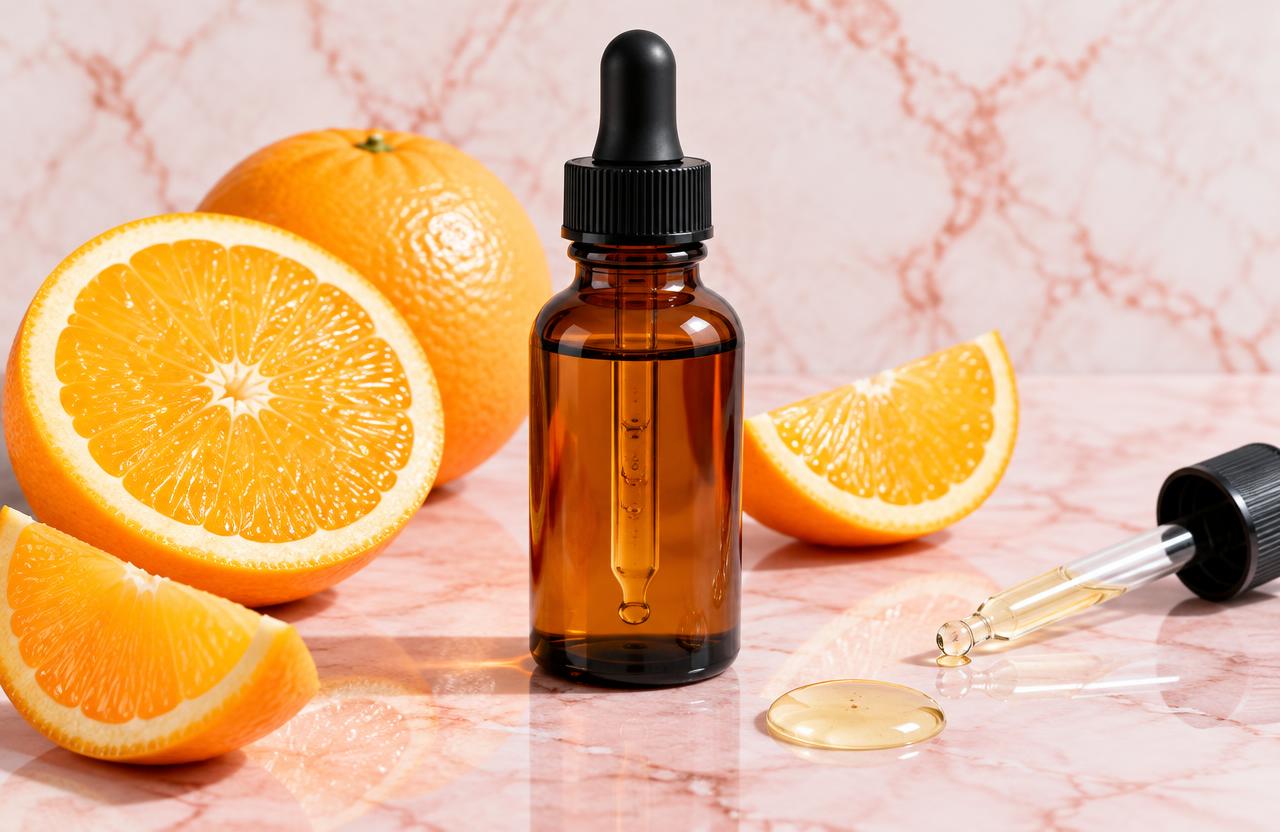
Dark orange or brown means it has oxidised; replace it.
Opaque, airtight bottles
Keep away from heat and light; use within 3 months of opening.
Pairs well with
Vitamin E, ferulic acid, hyaluronic acid and sunscreen.
Space out
Strong acids or retinol — use those at night instead.
Caution
Who should go slowly
Sensitive or rosacea skin
Choose a gentler derivative and a lower strength.
Tingling
Mild tingle is common; burning or rash means stop.