Tools — Hygiene
How to clean makeup tools
A simple, tool-by-tool routine to keep brushes, sponges, curlers and palettes clean and safe.
8 minute read
Written and reviewed by Beauty World Editorial · Last reviewed October 2026
Why
Why cleaning your tools matters
Bacteria
Oil, dead skin and makeup build up on tools and become a home for bacteria and fungus.
Breakouts
Dirty brushes and sponges can push that buildup back into pores.
Eye infections
Shared or unwashed eye tools can spread infections such as conjunctivitis.
Better makeup
Clean bristles and sponges blend evenly instead of leaving streaks and patches.
How often
Cleaning schedule
Foundation & concealer brushes
Once a week.
Powder & eyeshadow brushes
Every 2 weeks.
Beauty sponges
After every use, or at least twice a week.
Powder puffs
Weekly; wash more often if used with liquid products.
Eyelash curler & tweezers
Wipe after every use, deep clean weekly.
Pencil sharpener
Every time you sharpen an eye or lip pencil.
Palettes, lipsticks & compacts
Sanitise monthly, or after a cold or eye infection.
Makeup bag & mirror
Wipe out every 2 weeks.
Step by step
How to clean each tool
Brushes
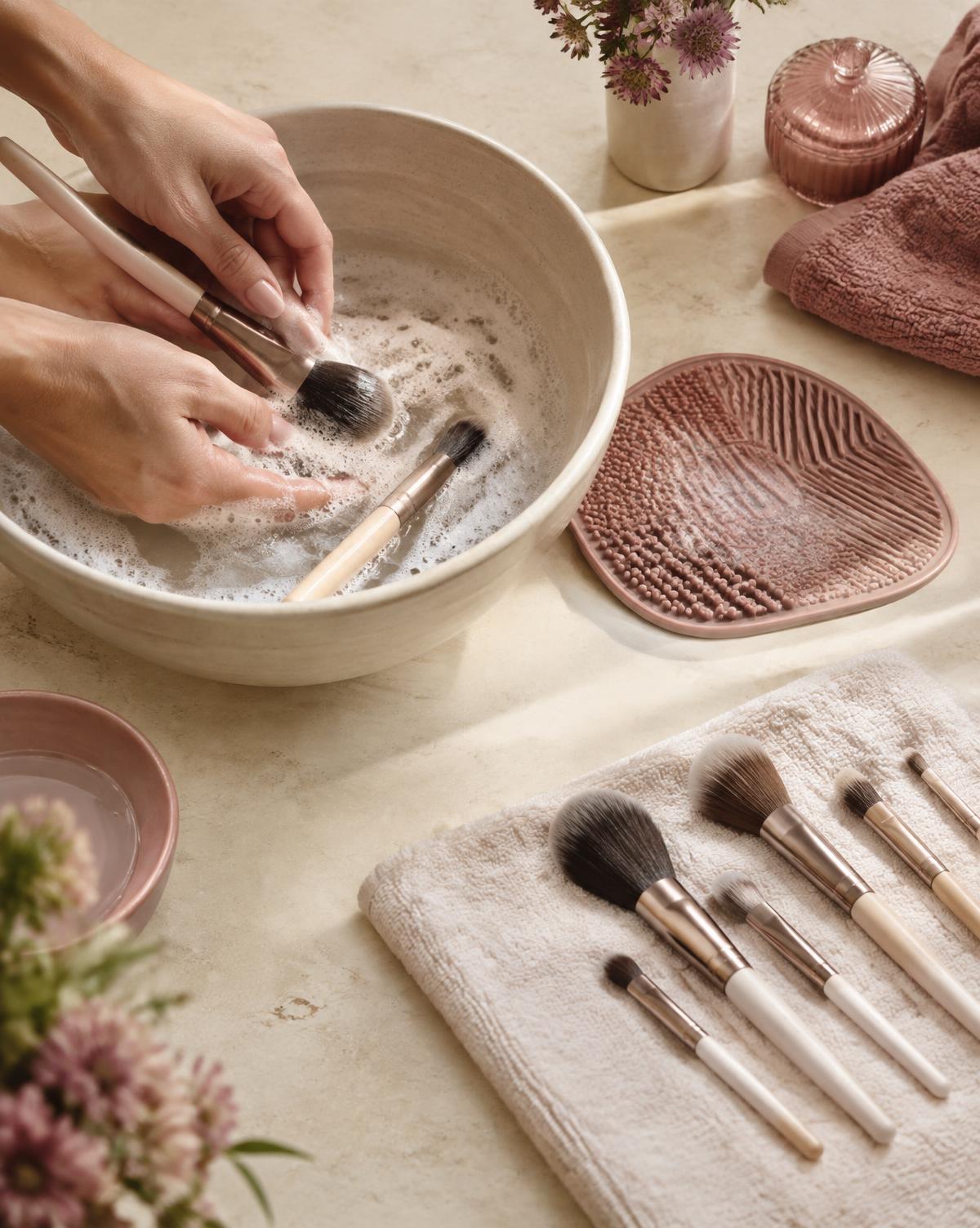
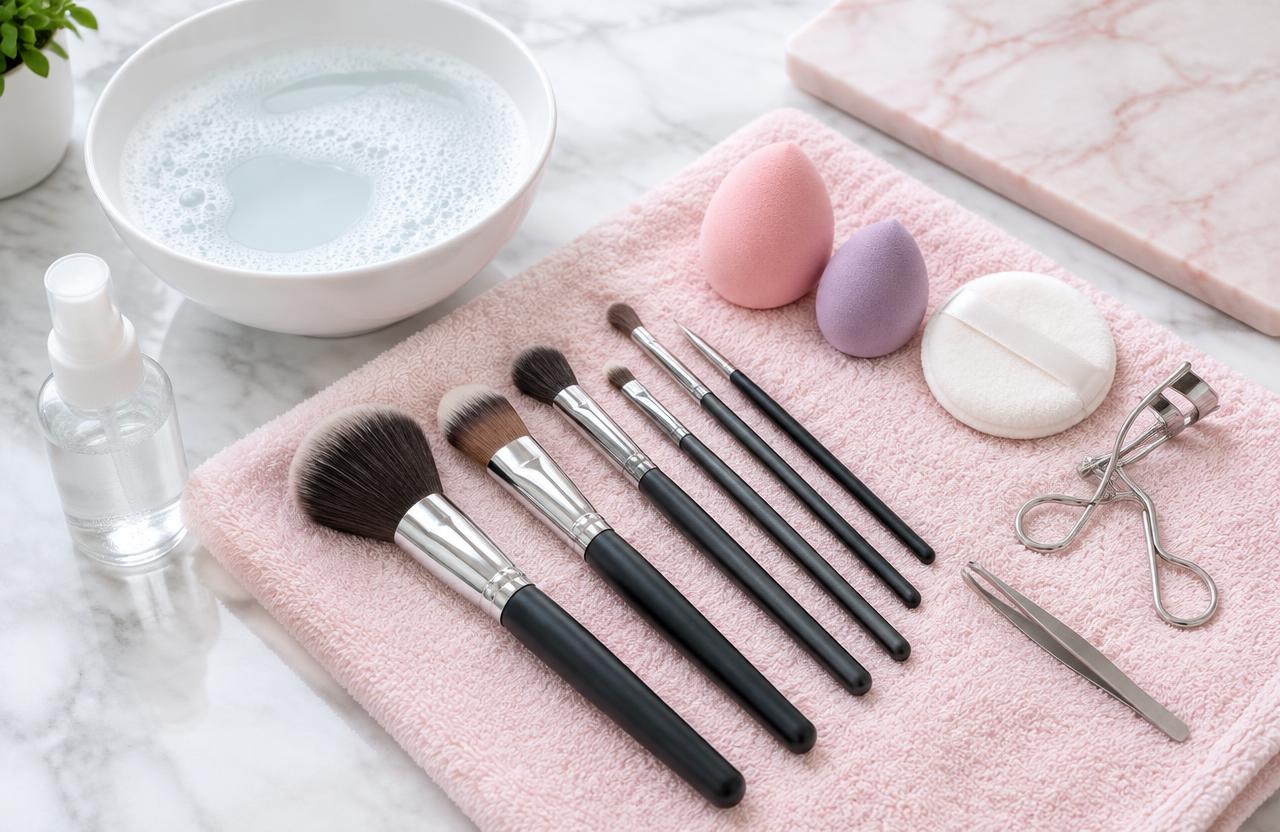
Wet the bristles only, swirl in gentle soap or brush cleanser, rinse bristles down and lay flat to dry. See the full brush guide for details.
Sponges
Soak in warm water, squeeze in soap until the water runs clear, then squeeze out and air-dry.
Powder puffs
Hand-wash with mild soap, rinse well, press in a towel and dry flat.
Eyelash curler
Wipe the pads and frame with 70% isopropyl alcohol; replace the rubber pad every 3 months.
Tweezers & small scissors
Wash with soap and water, then wipe the tips with alcohol and let dry.
Pencil sharpener
Brush out shavings, then swab the blade with alcohol.
Powder palettes & compacts
Scrape off the top layer gently, then mist lightly with alcohol and let it evaporate.
Lipsticks & cream products
Wipe the surface with a tissue, dip briefly in alcohol, then let air-dry.
Makeup bag
Empty it, shake out debris, wipe inside with a disinfecting wipe or wash if fabric.
Products
What to use — and avoid
Gentle soap
Fragrance-free baby shampoo or dish soap removes oil and makeup.
Brush cleanser
Liquid or solid cleansers work quickly; spot-clean sprays help between deep cleans.
70% isopropyl alcohol
Disinfects metal tools and powders; it evaporates fast.
Avoid
Hot water and soaking brush handles — they loosen glue. Skip harsh bleach on bristles.
Drying
Drying and storage
Air-dry
Lay brushes flat or bristles down, never upright while wet.
Ventilate
Dry sponges and puffs in open air, not in a closed bag.
Store clean
Keep tools in a covered holder or clean pouch away from steamy bathrooms.
Keep personal
Don't share eye or lip tools.
Replace
When to replace tools
Sponges
Every 1–3 months, or sooner if torn or stained.
Puffs
Every 3 months.
Brushes
When bristles shed, fray or lose shape — good brushes can last years.
Curler pads
Every 3 months, or when cracked.